
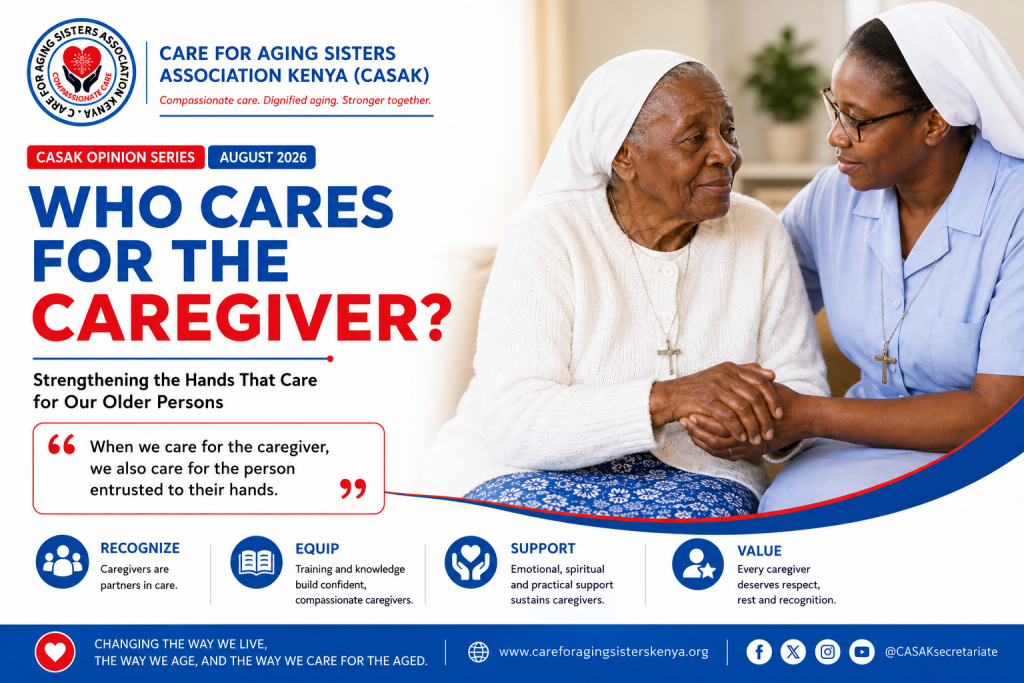
Strengthening the hands that care for our older persons
Care for the Aging Sisters Association in Kenya was founded on a mission to support the major superiors in the care for the elderly and infirm sisters. In every community we visited, just as it was in every home, there was a significant person, the caregiver, quietly carrying significant responsibility. This care giver has gradually assumed the role without ever being formally prepared for it.
It was through these encounters that one question became increasingly important to us: Who cares for the caregiver?
Caregiving can be deeply fulfilling. It is an expression of love, service and human solidarity. Yet it can also be physically demanding and emotionally exhausting. A caregiver may help an older person to bathe, dress, eat, move safely, take medication and attend medical appointments. The same caregiver may also be managing changes in memory and behaviour, chronic illnesses, incontinence, sleepless nights, hospital visits and the emotional distress that sometimes accompanies declining independence.
Many of these caregivers carry these responsibilities while simultaneously managing families, employment, religious or community responsibilities, and their own health without compensation.
Experience has taught us something important: care needs a team. No single caregiver can adequately carry the physical, emotional, social, medical and spiritual needs of an older person alone.
This reality is becoming increasingly important as people live longer and the need for long-term care grows. The World Health Organization notes that many countries, particularly in developing settings, continue to depend heavily on families and communities to provide long-term care. It also identifies building a trained care workforce and supporting unpaid caregivers as essential components of sustainable long-term care systems.
Kenya’s own health guidelines recognize older persons as a population requiring specific attention. At community level, they emphasize healthy practices, regular medical check-ups, care groups and referral services, while higher levels of care are expected to provide appropriate management and rehabilitation for chronic illness and disability.
But between the health facility and the older person’s everyday life stands the caregiver. That caregiver needs more than a good heart or a goodwill.
Compassion must be accompanied by competence.
We must also change how society views caregiving. Too often, caregiving is regarded as something that anyone can simply do. Yet quality caregiving requires knowledge, skill, patience, ethical responsibility and continuous learning. Those who dedicate themselves to caring for older persons deserve recognition, formation and support.
Caring for an older person requires an understanding of the aging process. Caregivers need practical knowledge about nutrition and hydration, medication support, mobility and fall prevention, infection prevention, dementia and cognitive changes, communication, safeguarding, palliative care and recognition of warning signs that require medical attention.
We have witnessed training transform caregiving. As caregivers gain knowledge and practical skills, they also gain confidence, changing not only how they provide care, but how they understand and respond to the person under their care. A caregiver who understands why an older person with dementia behaves differently, for example, is more likely to respond with patience rather than frustration. A caregiver trained to recognize changes in mobility, appetite, cognition or vital signs can seek help before a manageable condition becomes a medical emergency.
Yet training alone is not enough. Caregivers themselves need care.
The World Health Organization emphasizes support for caregivers’ physical and mental wellbeing, care competencies and, where needed, opportunities for respite. This is an important reminder that caregiver wellbeing is not separate from quality elder care; the two are closely connected.
Families, religious congregations and care institutions therefore need to create environments where caregivers can speak openly about exhaustion, ask for assistance and take appropriate rest without feeling that they have failed those entrusted to them.
At the Care for Aging Sisters Association Kenya (CASAK), our experience has reinforced the importance of investing in caregivers as part of strengthening the entire system of care. Through training, mentorship and accompaniment, we seek to equip caregivers not only with practical competencies but also with an understanding of person-centred care that places dignity at the heart of every interaction.
Care may be expressed through one pair of hands, but good care is sustained by many Supporting caregivers must therefore become a shared responsibility. Families can distribute caregiving responsibilities instead of leaving them to one person. Institutions can provide appropriate staffing, training, supervision and opportunities for rest. Healthcare professionals can recognize caregivers as important partners in the care process. Government and policymakers can increasingly include caregiver training and support within broader health-aging and long-term-care strategies.
And caregivers themselves must learn that caring for their own wellbeing is not selfishness. Rest, prayer, healthy relationships, physical activity, emotional support and asking for help are part of responsible caregiving.
As Kenya prepares for a future in which more people will live into older age, strengthening our caregiving systems cannot wait. We must invest not only in hospitals, medicines and infrastructure, but also in the human beings who provide care every day.
If we want our older persons to experience dignity, safety and compassionate care, then we must strengthen the hands that care for them
Because when we care for the caregiver, we also care for the person entrusted to their hands.
About the Author
Sr. Agnes Ngure is the Executive Director of the Care for Aging Sisters Association Kenya (CASAK). CASAK promotes healthy aging and dignified care through caregiver training, advocacy, participation in research, partnerships, brain health promotion and the strengthening of sustainable systems of care for older persons.